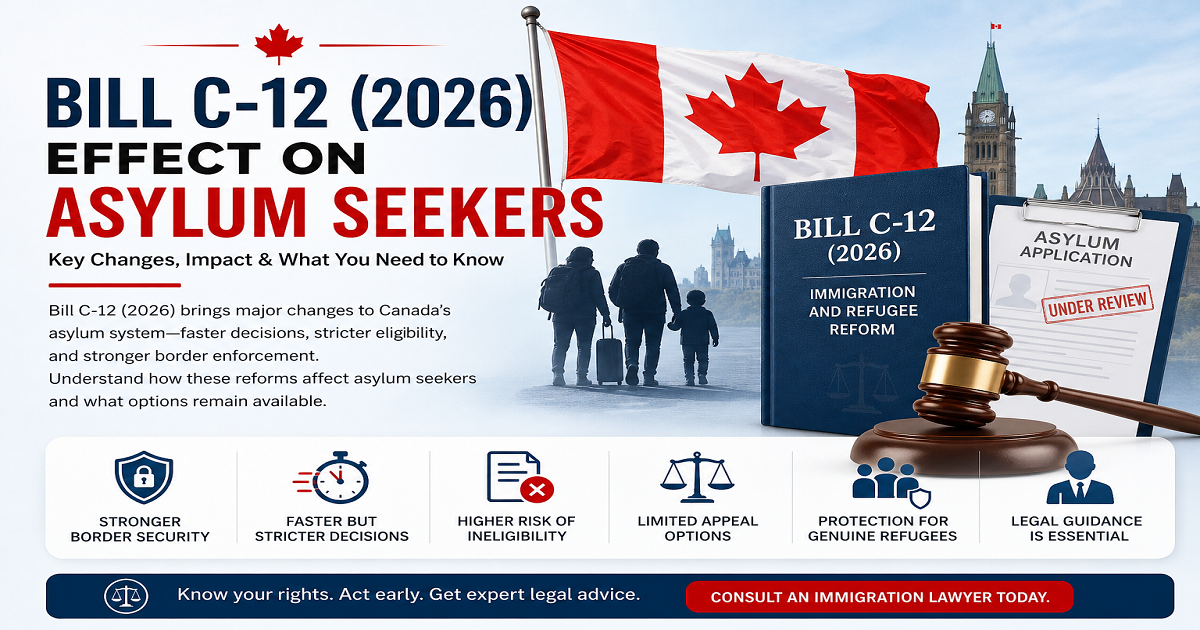
Bill C-12 (2026) Effect On Asylum Seekers
29th May 2026
BLOG (
Information )
# Bill C-12 (2026) – Effect on Asylum Seekers
# Introduction
Canada has long been considered one of the most welcoming countries for refugees and asylum seekers. However, with the introduction of Bill C-12 (2026), the immigration and asylum landscape is undergoing significant transformation. These changes are designed to strengthen border security, improve system efficiency, and address rising pressures on the immigration system.
While Canada continues to affirm its commitment to humanitarian protection, the law reflects a shift toward tighter control and more structured decision-making. Many stakeholders including legal experts, advocacy groups, and claimants have raised concerns about access, due process, and humanitarian protection as it introduces stricter eligibility assessments, faster processing systems, and expanded enforcement powers at the border.
---
# Background: Canada’s Immigration System Before Reform
Canada’s asylum system has historically been known for fairness, but it has also faced growing pressure.
# Rising asylum claims
Over the past decade, Canada has experienced a steady increase in asylum applications due to:
* Global conflicts
* Political instability
* Economic migration pressures
# Processing delays
One of the biggest challenges was backlog accumulation, leading to:
* Long waiting periods
* Uncertain legal status for claimants
* Administrative strain
---
# Key Objectives of Bill C-12
The government introduced this law to address structural weaknesses.
# Border security strengthening
The system now places greater emphasis on:
* Screening at entry points
* Identity verification
* Fraud detection mechanisms
# System efficiency improvements
Authorities aim to:
* Reduce backlog
* Speed up claim decisions
* Prioritize high-risk cases
---
# Major Changes Introduced
Under the new framework, certain asylum claims will no longer be referred to the Immigration and Refugee Board (IRB) for a full hearing. This means affected applicants may not receive a traditional refugee hearing process.
# Two major categories are now considered ineligible for IRB referral:
# 1. Late asylum claims
Individuals who make a claim more than one year after first entering Canada (after June 24, 2020) will no longer be eligible for an IRB hearing, even if they have left and re-entered Canada during that period.
# 2. Irregular entry claims
Individuals who enter Canada between official ports of entry along the U.S. border and submit an asylum claim after 14 days will also be considered ineligible for IRB referral.
---
# Why the Law Was Introduced
# Migration pressure and global conflicts
Increasing global displacement has significantly impacted Canada’s asylum system capacity.
# Fraud prevention concerns
Authorities cited concerns about:
* Misrepresentation of identity
* Non-genuine claims
* System misuse
---
# Effect on Asylum Seekers
* Faster but stricter decisions
* Higher rejection risk due to expanded ineligibility rules
* Increased scrutiny during screening stages
* More pressure to provide documentation quickly
---
# Concerns Raised by Experts
# Access to fair hearings
Legal advocates argue that accelerated processing may limit:
* Proper evidence submission
* Legal representation time
* Appeal opportunities
# Human rights implications
There are concerns about whether the system still fully protects:
* Refugees fleeing war zones
* Victims of persecution
---
# Why This Matters
These changes mean that some individuals may face:
* Faster but stricter decisions
* Fewer opportunities to present evidence
* Limited access to appeals
* Increased risk of removal proceedings
For many asylum seekers, this represents a significant shift in procedural fairness and access to protection mechanisms in Canada. Individuals from unstable regions and conflict zones may face difficulty documenting claims quickly. Stricter screening may more clearly separate economic migration from genuine refugee protection claims.
---
# What Happens If a Claim is Ineligible
If an asylum claim is found ineligible under Bill C-12, the following may occur:
* Removal orders
* Requirement to leave Canada within a specified timeframe
* Limited appeal pathways depending on the type of claim and prior history
---
# What Claimants Can Do
# Seek legal representation
Experienced immigration counsel can help navigate complex eligibility rules.
# Apply for Pre-Removal Risk Assessment (PRRA)
Some individuals may still apply for a PRRA to avoid being returned to a country where they may face:
* Persecution
* Torture
* Cruel or unusual treatment or punishment
* Risk to life
However, the PRRA process is not the same as a full refugee hearing. It is generally:
* Paper-based
* Without oral hearings in most cases
* Without witness testimony
* Limited in appeal rights
# Humanitarian applications
Applicants may request consideration based on:
* Compassionate grounds
* Establishment in Canada
* Family ties
---
# Government Safeguards
Despite stricter rules, the government maintains safeguards for:
* Genuine refugees
* Minors
* Individuals at risk of persecution or torture
---
# Role of Immigration Lawyers
Immigration lawyers play an important role in:
* Preparing strong legal submissions
* Ensuring procedural fairness
* Representing clients in hearings
* Advising on PRRA and humanitarian applications
---
# What You Should Do If Affected
If you believe you may be impacted by these changes, it is strongly recommended to:
* Seek legal advice immediately
* Review your immigration history and timelines
* Prepare strong supporting documentation
* Maintain records of identity and travel history
* Submit complete and accurate documentation
* Respond promptly to immigration requests
* Act quickly on all deadlines
Early guidance can significantly improve your ability to respond effectively under the new system.
---
# Future Outlook of Canadian Asylum Policy
The long-term direction suggests:
* Continued digitization
* More strict eligibility filtering
* Greater emphasis on border integrity
However, Canada is expected to maintain its global reputation as a refugee-receiving nation, balancing enforcement with humanitarian responsibility.
---
## Frequently Asked Questions (FAQs)
# 1. What is Bill C-12 2026?
It is a Canadian immigration reform law focusing on strengthening asylum eligibility screening and border enforcement.
# 2. How does it affect asylum seekers?
It introduces faster but stricter processing, increasing the likelihood of early-stage rejection.
# 3. Can rejected applicants appeal?
Appeal rights may be limited depending on the case and eligibility classification.
# 4. What happens if a claim is found ineligible?
The claimant may face removal proceedings and restricted legal options.
# 5. Are genuine refugees still protected?
Yes, the law maintains protection for individuals facing persecution, but with stricter screening.
# 6. What should applicants do if unsure about eligibility?
They should consult an immigration lawyer immediately for proper legal guidance.
---
# Conclusion
The Bill C-12 (2026) reforms represent a major shift in Canada’s immigration and refugee protection system. While the law aims to improve efficiency and strengthen border security, it also introduces stricter eligibility rules that significantly affect asylum seekers.
For claimants, understanding the new system is essential. Proper legal guidance, timely documentation, and awareness of available protections can make a critical difference in navigating this evolving legal landscape.